Contents10 sections
- Peacekeepers Trained for a Different War
- Peremoha: Post Office Basement and Five Killed
- Guards Title After Kyiv Oblast
- From Novobakhmutivka to Pokrovsk
- 12,689 Names: What This Figure Actually Means
- Own Drones Instead of Evacuation
- Missing or AWOL: How a Family Remains Without an Answer
- Commanders Who Outlast Compositions
- What Is Proven, What Is Probable, and What Remains an Allegation
- Conclusion: Only the Unit Number Proved Immortal
The 15th Separate Motorized Rifle Brigade has a word that poorly aligns with its current biography: "peacekeeping." Military Unit 90600 was created for participation in peacekeeping operations, staffed by contract soldiers, and trained for work in international contingents. In 2022, the unit entered Kyiv Oblast. Between 2023 and 2025, it saw mobilized personnel, former prisoners, contract soldiers, and attached regiments from dozens of regions pass through its ranks. By spring 2025, a dataset obtained by journalists listed 12,689 dead and missing.
In peacetime, the brigade's strength was estimated at over two thousand personnel. Therefore, 12,689 does not represent the losses of a single, unchanging collective. It is the trace of several compositions that succeeded each other under the same unit number, as well as servicemen from the 1232nd and 1437th Motorized Rifle Regiments, attached to the "Black Hussars." The name itself survived better than the people who bore it.
This dossier does not transform a leak into official statistics, nor does it accept every message from a closed Telegram channel as a proven fact. We distinguish four levels of data: documents and official decisions; named lists verified by journalists; testimonies from residents and relatives; and statements from parties and reports for which there is no independent confirmation. Even with such limitations, the history of Military Unit 90600 reveals a mechanism of rare scale: how an elite brand, awards, and new manpower allow a unit to survive losses many times exceeding its pre-war strength.
Peacekeepers Trained for a Different War
The 15th Separate Motorized Rifle Brigade was formed in 2005 in the settlement of Roshchinsky, Samara Oblast. It was part of the 2nd Guards Combined Arms Army of the Central Military District and was considered the only specialized peacekeeping brigade of the Russian Ground Forces. Candidates were expected to serve under contract, undergo training for work in an international contingent, and, according to early requirements, possess knowledge of a foreign language.
The formation participated in operations in the Georgian-Abkhaz conflict zone and later became the basis of the Russian contingent in Nagorno-Karabakh. In 2019, it was awarded the honorary title "Alexandriyskaya" and linked to the history of the 5th Alexandriysky Hussar Regiment, known as the "Black Hussars" and "Immortal Hussars." The historical image provided the modern unit with a convenient visual brand: black uniform, a skull, cavalry legend, and the word "immortal."
But even before the full-scale invasion, the peacekeeping status diverged from practice. InformNapalm collected photographs, geolocations, and award documents of forty brigade servicemen, linking them to Crimea and Donbas in 2014–2015. The images showed Ukrainian settlements, equipment with concealed unit markings, "For the Return of Crimea" medals, and photographs from both sides of the border. This is OSINT identification, not a judicial verdict for every individual, but it demonstrates the systemic use of the unit far beyond its declared peacekeeping function.
By February 2022, the brigade was commanded by Lieutenant Colonel Andrey Marushkin. After the campaign near Kyiv, he received orders, the rank of Colonel, and by summer 2022, was appointed commander of the 201st Russian military base in Tajikistan. The brigade commander's career progression is important for understanding the system: heavy losses and accusations of crimes did not halt the advancement of the person responsible for the formation during the initial period of the war.
Peremoha: Post Office Basement and Five Killed
On February 28, 2022, Russian units occupied the village of Peremoha in Kyiv Oblast. Investigations by Radio Free Europe/Radio Liberty and materials from the Ukrainian investigation linked the servicemen present there to the 15th Brigade. Local residents were held in the basement of the post office. Survivors recounted beatings, mock executions, and shootings during interrogations. Five men were killed.
Journalists reconstructed the sequence of events based on residents' testimonies and camera recordings. According to the investigation, the order to shoot was given by one of the battalion commanders and his assistant. Personal responsibility must be established by a court, but the episode itself is not based solely on one party's statement: there is a place of detention, bodies of the deceased, witnesses, video, and an identified unit.
Another body of evidence relates to Novyi Bykiv, Chernihiv Oblast. The New Yorker and The Wall Street Journal described a basement where over twenty people were held, beatings, and mock executions. Before retreating, four prisoners were taken away and killed. Several Russian units operated in the village, so it is incorrect to automatically attribute every crime to the 15th Brigade. However, documents from the Ukrainian investigation and testimonies link its personnel to the occupying force and specific episodes of violence in the region.
The SBU later announced suspicion against Andrey Marushkin, alleging that units under his command shelled civilian targets in a number of villages in Kyiv and Chernihiv Oblasts. This is the position of the Ukrainian investigation, not a final verdict. In this article, we do not extend it to collective guilt for all servicemen of Military Unit 90600. The significance of the suspicion lies elsewhere: a commander whose unit received a Guards title simultaneously became a subject of an investigation into orders that led to civilian deaths.
Guards Title After Kyiv Oblast
On May 9, 2022, Vladimir Putin signed Decree No. 278 and awarded the brigade the honorary title "Guards" for mass heroism, valor, steadfastness, and courage. The decision came after the retreat of Russian troops from the northern regions of Ukraine and the publication of the first testimonies of crimes. The official text did not explain for which specific operations the formation was awarded.
In November 2023, the brigade received the Order of Suvorov. Between the two awards, its pre-war cadre had already suffered heavy losses and was supplemented by mobilized personnel. The awards pertain to the unit number and its banner, not to an unchanging collective. Therefore, the same brigade could simultaneously accumulate honorary titles and physically replace a significant portion of its personnel.
This difference between legal and human existence is key to the entire history of the "Black Hussars." In documents, Military Unit 90600 is continuous. In named lists, it breaks down into waves: pre-war contract soldiers, mobilized personnel of 2022, prisoners and assault troops, new contract soldiers, attached units. Official chronicles record the banner and occupied settlements; relatives record the dates of last contact.
From Novobakhmutivka to Pokrovsk
After northeastern Ukraine, the unit operated in the Svatove and Kreminna directions. In autumn 2023, the first particularly noticeable surge in losses began: the brigade participated in the offensive on Avdiivka and battles in the Novobakhmutivka area. According to "Verstka's" analysis, by this point, the dataset already contained at least 2,128 dead. Simultaneously, the number of reports about prisoners, missing persons, and internal conflicts within the unit sharply increased on Telegram.
The Avdiivka campaign marked a transition from a cadre formation to a large system for absorbing reinforcements. The brigade's documents included people from over 77 Russian regions, citizens of several post-Soviet countries and Egypt, residents of occupied territories, as well as mobilized personnel from the 1232nd and 1437th Regiments. The word "brigade" here no longer describes a regular staff: under the command of Military Unit 90600, a changing group of its own and attached forces operated.
In autumn 2024, the "Black Hussars" advanced in the Mykhailivka area in the Pokrovsk direction. The bloodiest day in the leaked list was October 11: at least 152 dead. After the capture of the settlement, six servicemen received the titles of Heroes of Russia, and the Minister of Defense called the unit an example of bravery and courage. A few days later, the number of posts in chats about people who had stopped making contact sharply increased.
By December 2024, after the battles for Novotroitske, the dataset contained 6,791 dead and 1,245 missing. The largest increase occurred precisely at the end of 2024 and the beginning of 2025. In February 2025, official sources continued to report active operations by the brigade in the Pokrovsk direction; throughout Russia, over 1,700 servicemen associated with it were buried during the first months of the year. Some of these burials related to deaths that occurred earlier: the delay between death, identification, and burial could be months.
12,689 Names: What This Figure Actually Means
The "I Want to Live" project, and subsequently "Verstka," obtained a document with names, dates of birth, regions, ranks, dog tags, positions, dates of death, and burials. It covered those killed until mid-March 2025 and those missing until mid-April. In total, it lists 12,689 people: 7,436 dead and 5,253 missing in action.
Journalists selectively checked the entries and cross-referenced them with the "Mediazona" and BBC database. Approximately 3,500 names had confirmed matches; over a thousand more had partial matches. This is serious confirmation of the dataset's structure, but not independent verification of each of the 12,689 lines. Therefore, the correct phrasing is "according to the named list, which journalists consider likely authentic," rather than "12,689 deaths officially confirmed."
Categories also cannot be added together as identical. A missing person could be deceased without an evacuated body, a prisoner, wounded, transferred, AWOL, or a person whose record was lost. It is precisely the lack of transparent accounting that makes the dataset politically significant: thousands of families do not understand which category their relative belongs to, and payments, inheritance, and children's status depend on the category.
89% of the losses in the list are rank-and-file personnel: 6,860 dead and 4,432 missing. Officers account for 92 dead and 47 missing, about one percent of the dataset. This disproportion partly reflects the numerical strength of the categories, but also shows who was more often directly in assault groups. Command was maintained while rank-and-file personnel were replaced again and again.
The brigade's pre-war strength exceeded two thousand personnel. Even accounting for attached regiments, rear services, and erroneous entries, the scale is several times larger than the initial composition. "Verstka" concluded that the brigade completely replaced at least three compositions. This is more cautious than dividing 12,689 by two thousand: not all people simultaneously served in the regular Military Unit 90600, and not every missing person died. But the multiple replacement of personnel itself is confirmed by the chronology of recruitment and losses.
Own Drones Instead of Evacuation
One of the most telling videos appeared in February 2025. A man with a bandaged arm, identified as a serviceman of the 9th company of the 3rd motorized rifle battalion, stated that the group had been traversing swamps for several days, taking preserved footwear from the dead, and received no evacuation. Instead of help, they were allegedly given a battery and a note threatening to destroy the soldiers with their own drones if they did not make contact.
The video and its attribution were published through a closed channel, and the command provided no public explanation. This does not allow every detail to be considered established. But the video aligns with dozens of other complaints from the same unit: about refusal of evacuation, threats to "zero out," punishment by sending to assault, and treating the wounded as order violators.
In October 2023, messages from the unit spoke of self-inflicted wounds, desertion, drunkenness, and "pits" — unofficial places of detention. In February 2025, videos of abuse circulated: men extinguished cigarettes on a comrade's body, humiliated him, and forced him to dance. The publication named the call signs of the alleged commanders. After the publicity, servicemen's wives, according to them, began receiving threats.
For none of these episodes is there an open final court decision. This is precisely part of the problem: statements exist, videos exist, relatives report hundreds of appeals, but there is no public result of an investigation. The system that demands evidence from families itself does not publish a verifiable response.
Missing or AWOL: How a Family Remains Without an Answer
Since 2024, relatives of servicemen from Military Unit 90600 and attached regiments have published collective appeals and petitions. They reported that contact disappeared after assaults on Krasnohorivka, Avdiivka, Zhelanne, Vovche, Prohres, Petrivka, and Vyshneve. In some cases, the person did not appear on the list of dead, among prisoners, or in hospitals.
Particularly painful was the status of AWOL — unauthorized absence from the unit. Families claimed that this status was assigned to people who disappeared immediately after a combat mission. Such a status shifts suspicion to the serviceman and can block or delay payments. For the commander, it also turns a loss into a disciplinary problem: the person did not die or go missing while performing an order, but allegedly left on their own.
In one petition, relatives of the 1437th Regiment claimed that from November to December 2024, two companies were sent without sufficient support, and out of approximately 400 people, about twenty survived. The mother of one serviceman spoke of extortion, money transfers from the bank cards of the deceased, and threats to "zero out" her son. "Verstka" explicitly noted that it found no independent confirmation for some of these claims, although statistics indeed showed high losses for the regiment.
This is why human stories cannot be used as an exact balance of battle. They are important in another way: they show a recurring scenario of relations between the family and the system. A person disappears; command does not make contact; units and departments send relatives to each other; different statuses appear in documents; a public appeal provokes not an investigation, but threats or silence.
According to a separate study of search messages, recounted by Idel.Realii, out of almost five hundred mentioned units, the 15th Brigade was encountered most frequently — about two thousand times. This does not equate to two thousand unique missing persons: announcements can be duplicated. But even with this caveat, the concentration of searches around one unit number confirms that this is not about a single clerical error.
Commanders Who Outlast Compositions
In 2014, the unit was commanded by Vitaly Gerasimov, then Nikolay Zakharov; their signatures and periods of service appear in OSINT materials about Donbas. By the full-scale invasion, the brigade was led by Andrey Marushkin. After the Kyiv campaign, he did not disappear from the system but received a new appointment to a major foreign base.
Later official publications link the brigade to Andrey Buylov, who received the title of Hero of Russia and a general's rank. But the public history of command is fragmented: various sources name battalion commanders, assault detachment commanders, and acting commanders, not always indicating the exact period. We do not attribute all events of 2023–2025 to a specific person without an appointment order or reliable dating.
Managerial continuity is more noticeable by the result. The command could lose contact with thousands of people, accept new regiments, form assault detachments, and continue to receive awards. The unit number remained suitable for the next replenishment, even as the families of the previous one were still searching for their loved ones.
What Is Proven, What Is Probable, and What Remains an Allegation
Documentarily confirmed are Military Unit 90600, its deployment in Roshchinsky, subordination to the 2nd Combined Arms Army, peacekeeping designation, participation in Nagorno-Karabakh, the awarding of Guards status in May 2022, and the Order of Suvorov in November 2023. Photo and geolocation materials convincingly show the presence of brigade servicemen in Crimea and Donbas since 2014.
The leaked dataset of 12,689 entries underwent selective verification and extensive cross-referencing with an independent database. It is likely authentic but is not a published official document of the Ministry of Defense. The 7,436 dead and 5,253 missing are categories within this dataset, and approximately 3,500 matches in the "Mediazona" database represent a narrower independent lower bound of confirmation.
The brigade's presence in Kyiv and Chernihiv Oblasts is confirmed by investigative materials, journalistic investigations, and testimonies. Regarding Peremoha, there is a specific episode with five dead and an identified place of detention. In Novyi Bykiv, several Russian units operated, so responsibility for each episode requires personal identification. The suspicion against Andrey Marushkin is a procedural decision of the Ukrainian investigation, not a final verdict.
Threats with their own drones, abuse, "pits," extortion, theft of money from cards, and shooting subordinates stem from video recordings, closed channels, and relatives' accounts. Some materials visually confirm the fact of violence itself, but there are no open investigation results or independent confirmation of all named perpetrators. Therefore, these episodes are described as testimonies and accusations, not facts established by a court.
Conclusion: Only the Unit Number Proved Immortal
The history of the 15th Brigade is built on four transformations. Peacekeepers were turned into participants in a hidden war. Cadre contract soldiers — into the basis of the invasion. A unit number that lost its personnel — into a center of attraction for mobilized personnel, prisoners, new contract soldiers, and attached regiments. And mass casualties — into an award-winning history of captured settlements.
The name "Black Hussars" refers to an "immortal" regiment. In the modern version, neither the individual nor even the pre-war collective proved immortal. What proved immortal was the administrative number: Military Unit 90600. It outlives the dead, the missing, changes in commanders, and several compositions, retaining its banner, orders, and the ability to accept the next wave.
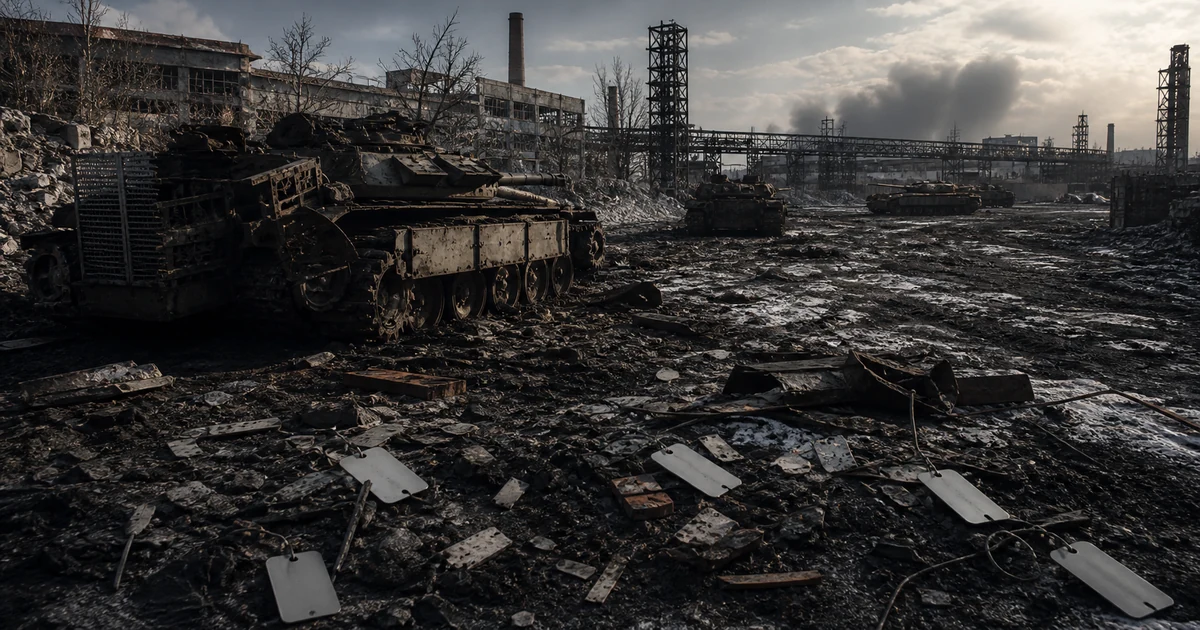
The 12,689 entries are not a flawless official figure and not a reason to abandon verification. On the contrary, it is a demand for the state to open its own accounting. How many people actually died? How many remain on the battlefield? How many are prisoners, in hospitals, or other units? How many were recorded as AWOL after disappearing on a mission? Until there is an answer, relatives are forming their own headquarters from Telegram chats, petitions, and photos of dog tags.
For a unit created for international peace and security, the outcome is particularly telling. Its former specialization did not stop crimes, its elite status did not protect its personnel, and awards did not make accounting more honest. In its official biography, the "Black Hussars" continue to advance. Unofficially, thousands of families are still trying to find out if the person the brigade has already replaced with a new one still exists.