Contents9 sections
In March 2022, the 37th Separate Guards Motorized Rifle Brigade from Kyakhta, Buryatia, was almost halved in strength after several weeks of fighting near Kyiv. According to journalist Roman Tsimbalyuk, out of more than 1,500 servicemen involved in the battles for Makarov, the brigade lost about half of its personnel. Its own tank driver, according to Western sources, ran over the brigade commander, Colonel Yuri Medvedev, with his tank tracks — in retaliation for these losses. Medvedev was evacuated to a hospital in Belarus, where he died.
This is the most famous detail of the 37th Brigade's history — but not the only one. While the unit was fighting near Makarov, civilians were dying on a neighboring stretch of road between the villages of Motyzhyn and Yasnohorodka: 37 people died there in two weeks from late February to mid-March 2022, and on one particular section of the highway, according to the Ukrainian investigation, 27 died. In the captured village of Vyshhorod, according to the State Bureau of Investigation of Ukraine, the deputy brigade commander organized a command post with an isolation facility for holding local residents. Servicemen of the brigade are also accused of gang rape. None of the suspects named by Ukraine, judging by open sources, have been punished in Russia — and the officer whom the investigation identifies as the organizer of the illegal isolation facility, according to Wikipedia, later headed the brigade and, apparently, commands it to this day.
What is Military Unit 69647
The 37th Separate Guards Motorized Rifle Don Cossack Budapest Red Banner Order of the Red Star Brigade named after E. A. Shchadenko was formed in 2009 by reorganizing the 5th Guards Tank Division. It is part of the 36th Combined Arms Army of the Eastern Military District, stationed in the city of Kyakhta, Republic of Buryatia — a border region on the border with Mongolia. This is one of the formations that, along with the 106th Airborne Division and the 155th Naval Infantry Brigade, were in the first wave of the Kyiv offensive in February 2022.
Tank Ran Over Its Own Commander
In March 2022, units of the brigade were fighting in the Makarov area — a key settlement on the western approaches to Kyiv. According to Roman Tsimbalyuk, two battalion tactical groups of the brigade, comprising more than 1,500 servicemen, lost about half of their personnel near Makarov.
According to reports from Western officials, cited by several media outlets, one of Colonel Medvedev's subordinates, dissatisfied with the scale of losses, deliberately ran him over with a tank, crushing both his legs. Medvedev was evacuated to a hospital in Belarus, where he later died from his injuries. Western intelligence subsequently repeatedly referred to this episode as one of the signs of demoralization among Russian troops in the early stage of the invasion.
This assertion comes from anonymous sources and remains a version, not a judicially established fact: an independent investigation into the circumstances of Medvedev's death, the results of which would have been published, could not be found. The fate of the tank driver himself is not traceable in open sources.
"Road of Death": Motyzhyn — Yasnohorodka
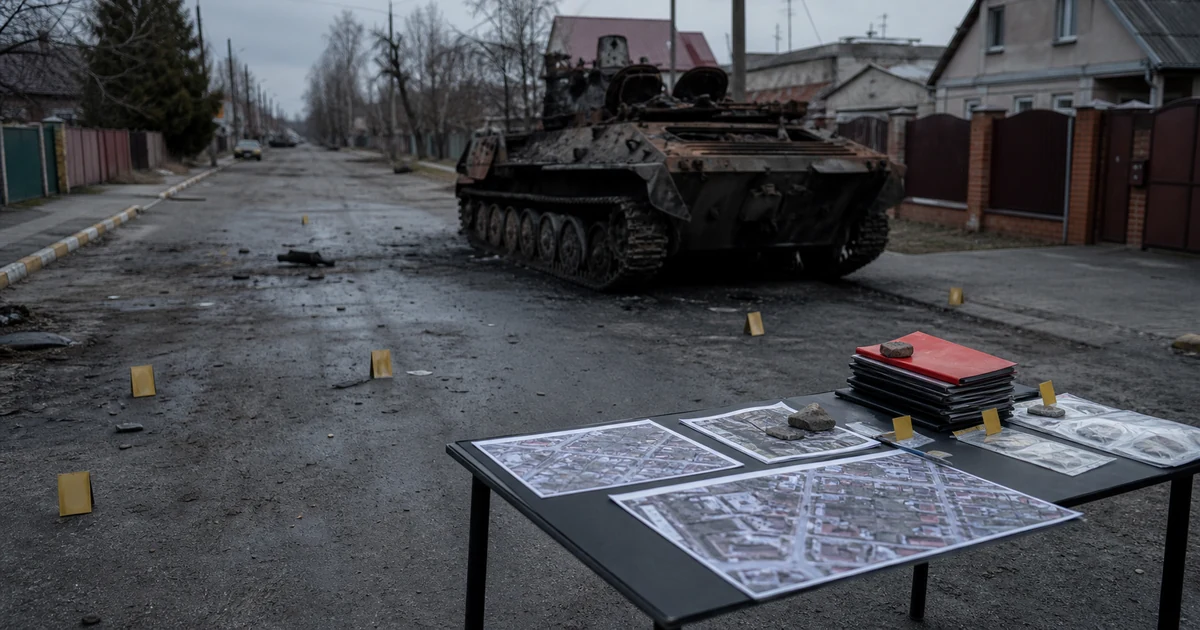
While Russian military personnel were dying in Makarov, several kilometers away, on a seven-kilometer stretch of road between the villages of Motyzhyn and Yasnohorodka in Kyiv Oblast, civilians were dying. According to a Wall Street Journal investigation, 37 people died on this stretch from late February to mid-March 2022. Journalists, who analyzed accounts from local residents, photo and video recordings of shelling, and fragments of ammunition, concluded that the shelling was carried out with 82- or 120-millimeter mortar shells from a distance of 3.2 to 8 kilometers — and linked responsibility specifically to the 37th Separate Guards Motorized Rifle Brigade.
Separately from the overall WSJ count, the Ukrainian investigation documented a specific episode on March 3, 2022: six servicemen of the 37th Brigade, commanded by Lieutenant Vadim Ovchinnikov, stopped a car with a family near Motyzhyn, killed the parents traveling in it, and fatally wounded one of the daughters, leaving the second in a nearby village. According to the investigation, a total of 27 civilians were killed by brigade forces on this section of the highway, and five more sustained severe injuries. For these killings, the Ukrainian prosecutor's office announced suspicion of war crimes not only against the perpetrators on site but also against the brigade commander, Colonel Ivan Kiy, as responsible for the actions of his subordinates.
Vyshhorod: Command Post and Isolation Facility
The State Bureau of Investigation of Ukraine filed a separate, more detailed charge regarding an episode not directly related to the shootings on the road. According to the SBR, announced on April 30, 2024, in early March 2022, in the village of Vyshhorod, Bucha Raion, the then-deputy commander of the 37th Brigade, Colonel Ivan Kiy, by order of higher command, organized a command post and a temporary detention facility. His subordinates, according to the investigation, were tasked with searching for "patriotically minded" local residents, detaining them, and interrogating them with the use of physical and psychological violence; facts of looting civilian property were also recorded.
Along with Kiy, the SBR named three other servicemen: Captain Oskar Sitdikov, an officer of the brigade's intelligence department; Lieutenant Magomed Magomedov, commander of the 9th Motorized Rifle Company; and Sergeant Georgy Radnatarov, squad leader of the electronic reconnaissance platoon. All four were заочно (in absentia) declared suspects under Part 2 of Article 28 and Part 1 of Article 438 of the Criminal Code of Ukraine — complicity in violating the laws and customs of war, the sanction for which provides for up to 12 years of imprisonment. Since all suspects are located on the territory of Russia, beyond the reach of Ukrainian justice, the case remains in absentia.
Rapes in Bucha
A separate investigation by the publication "Vazhnye Istorii," published on April 1, 2023, named servicemen of the 37th Brigade suspected of gang-raping a resident of Kyiv Oblast named Kovalchuk during the occupation of the Bucha urban hromada. According to the investigation, from March 18 to March 30, 2022, the woman was repeatedly raped by three servicemen of the brigade: Sergeant Alexander Radnatarov, mortar commander of the third battalion, a native of the village of Sredny Kharlun in Buryatia — according to the accusation, he, under threat of an automatic rifle, took her to a garage and raped her daily from March 18 to March 25; Private Kirill Kholmurzaev, medic of the medical platoon, a native of the village of Obus in Irkutsk Oblast — from March 24 to March 25; and Belikto Zhugdurov, a native of the village of Tsagan-Ol in Zabaykalsky Krai — on March 18 and from March 26 to March 30.
The Prosecutor General's Office of Ukraine brought suspicions under Article 438 of the Criminal Code. When journalists from "Vazhnye Istorii" contacted Alexander Radnatarov and asked about what happened, he replied: "I'm waiting for a summons, I'll be with you soon." This phrase cannot be interpreted as an admission — but neither can it be interpreted as a denial; there has been no independent trial in this case, as with other episodes.
Bato Basanov: World Champion Who Died as a Gunner
Among the deceased servicemen of the brigade is Guards Corporal Bato Valeryevich Basanov, gunner-operator of the 1st Tank Company of the tank battalion. In 2021, as part of the Russian team, he became a world champion in tank biathlon. On March 14, 2022, Basanov died in battle; it took seven weeks for his body to return to his family in Buryatia. He was posthumously awarded the Order of Courage.
Basanov's story is not about war crimes or command failure: it is one of the few personally documented cases of the death of rank-and-file personnel of the brigade in the first weeks of the invasion, against which the overall figure of losses remains blurred. As of the end of June 2022, open sources confirmed the death of at least 45 servicemen of the brigade — despite claims of losses near Makarov suggesting that actual losses could be several times higher than this individually confirmed figure.
Who Commands the Brigade Now
A key detail of this story is not the accusations themselves, but what happened to the person against whom they were brought. In early March 2022, when, according to the SBR, the story with the isolation facility in Vyshhorod was unfolding, Ivan Kiy was the deputy commander of the brigade — that is, the second-highest officer, but not the first person. Colonel Medvedev, the first person, died that same month at the hands of his own subordinates. According to Wikipedia, Kiy is ultimately named as the brigade commander during the Kyiv offensive — meaning, apparently, he took command of the brigade shortly after Medvedev's death and, as far as can be judged from available sources, continues to command it.
This means that the officer whom the Ukrainian investigation accuses of organizing an illegal isolation facility and of command responsibility for the killings of civilians on the road near Motyzhyn was not removed, was not subjected to an internal investigation in Russia, and, apparently, received a promotion — from deputy to full commander — within the same year that the crimes attributed to him were committed. Open sources contain no mention that Russian military or investigative bodies ever considered these accusations.
Precision in wording is important here. The accusations by the SBR and the Prosecutor's Office of Ukraine are suspicions brought in absentia, not a court verdict: they are based on evidence collected by the investigation but have not been tested by an adversarial process involving the defense. The fact that Kiy holds the post of brigade commander is not equivalent to an admission of his guilt — but neither does it refute the accusations made. The combination of these two facts — an open suspicion and a continuing military career — is itself the subject of this investigation, not its conclusion.
What Is Proven and What Remains Unestablished
Proven and confirmed by several independent sources: the brigade's participation in the battles for Makarov in March 2022 with heavy personnel losses, the death of Colonel Medvedev in the same month, the death of Bato Basanov on March 14, 2022, with an exact date and his posthumous award of the Order of Courage, the death of 37 people on the Motyzhyn — Yasnohorodka road established by a WSJ journalistic investigation, the suspicion brought by Ukraine against Colonel Kiy, Lieutenant Ovchinnikov, and several other servicemen regarding the episode of March 3, 2022, a separate suspicion by the SBR against Kiy and three fellow servicemen regarding the episode in Vyshhorod, as well as the suspicion of gang rape against the three named servicemen according to "Vazhnye Istorii."
Not established and should not be presented as fact: the exact circumstances of Colonel Medvedev's death (the version of intentional ramming belongs to anonymous sources, not a judicial investigation), the identity and fate of the serviceman who ran him over, the exact final number of brigade losses near Makarov (the claim of 50% belongs to one source citing unnamed officials), as well as the legal guilt of any of the suspects named by Ukraine — an in absentia suspicion is not equivalent to a verdict. The fact that Kiy allegedly continues to command the brigade is based on the relevance of open source data (Wikipedia) at the time of publication and may change.
Conclusion
The 37th Brigade is a rare case where all three usually disparate narratives of a website about the Russian army converge in one formation during the same month: military catastrophe (loss of half of its personnel near Makarov), mutiny within its own ranks (death of the commander at the hands of a subordinate), and documented war crimes against the civilian population (Motyzhyn, Vyshhorod, Bucha). None of these three narratives led to public accountability for anyone on the Russian side.
Instead of an analysis of the reasons why a brigade with over 1,500 personnel lost almost half of its strength near Makarov, and its servicemen became involved in several war crime cases, open sources record something else: an officer named as the organizer of an illegal isolation facility became the head of the unit. The question of what this says about the criteria by which the Russian army selects and promotes commanders remains open — but the answer, apparently, has no relation to an analysis of what happened near Motyzhyn.