Contents4 sections
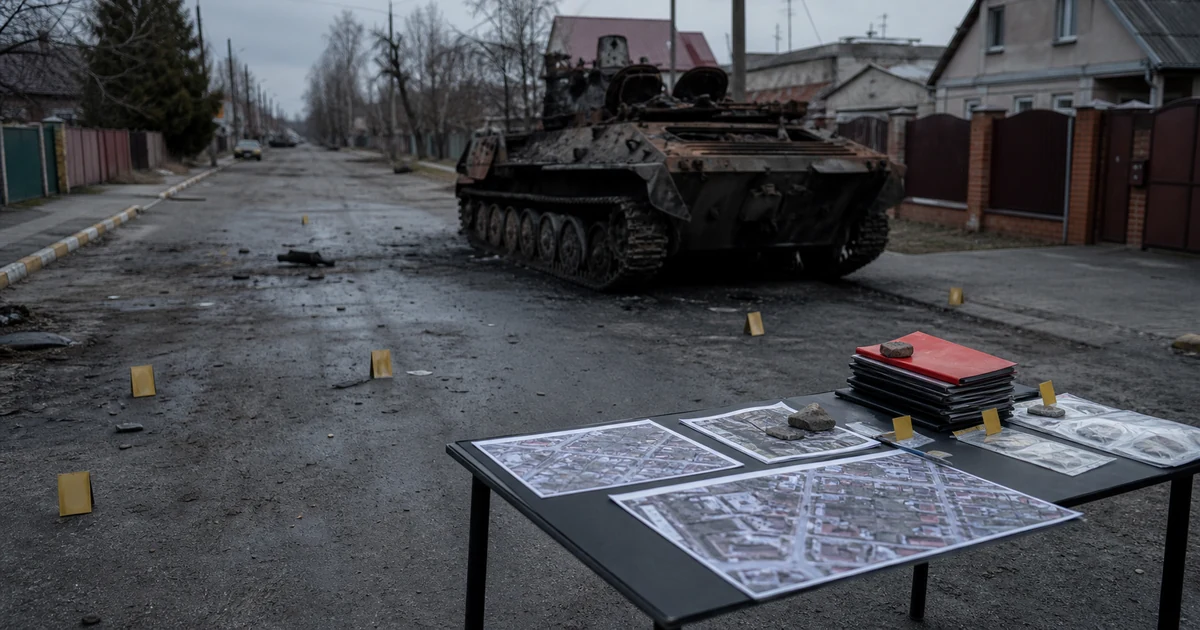
In the spring of 2022, the Russian force group commanded by Alexander Chaiko failed to achieve the invasion's main objective — capturing Kyiv. After the retreat, hundreds of murdered civilians were discovered in Bucha and neighboring settlements. An investigation by the Associated Press and FRONTLINE established that the violence was not chaotic but occurred as part of organized 'sweeps' in territory controlled by Chaiko's subordinate troops.
Four years later, Chaiko received not a dismissal, but one of the Russian army's key posts. In May 2026, he became Commander-in-Chief of the Aerospace Forces. The appointment was officially confirmed by the Ministry of Defense.
The Plan for a Rapid Capture of Kyiv
Chaiko commanded troops of the Eastern Military District, which advanced from Belarus along the western bank of the Dnipro River. The Russian plan relied on a swift political collapse of Ukraine. Columns stretched along roads, supply lines were disrupted, and resistance proved significantly stronger than anticipated.
By the end of March, Russian forces retreated from Kyiv Oblast. The military outcome was an obvious failure: the capital was not captured, the force group suffered losses, and it abandoned northern Ukraine. But it was only after their withdrawal that the consequences of the occupation for civilians became apparent.
'Sweeps' as a System
AP and FRONTLINE examined camera footage, intercepted conversations, documents, survivor testimonies, and the locations of command posts. Journalists concluded that Russian units used lists, went house-to-house, detained individuals suspected of aiding the Ukrainian army, tortured, and killed people.
The investigation linked specific incidents on Yablonska Street to servicemen of the 76th Air Assault Division. The division commander, Sergey Chubarykin, was subordinate to Chaiko. Experts emphasized that for a senior commander to be held criminally liable, it must be proven that he issued unlawful orders, knew about the crimes, or failed to take measures to stop them. The mere position in the chain of command does not substitute for such proof.
However, the investigation also showed something else: Chaiko was physically present in the area of operations, and the violence was repeated in several settlements. This makes the version of individual 'rogue' soldiers increasingly unconvincing. The Russian side has not conducted a systemic investigation into these incidents.
Syria and the Return to the Top
Before Ukraine, Chaiko commanded the Russian force group in Syria and was awarded the title Hero of Russia. After the failure near Kyiv, he reappeared in the Syrian theater, then became Deputy Chief of the General Staff. In 2026, the combined-arms general took charge of the VKS, despite not being a career pilot.
This appointment expands the scope of his responsibility: the VKS manages aviation, air defense, and a significant portion of Russia's strike capabilities. For the system, his experience proved not disqualifying, but suitable for further promotion.
What This Means
Chaiko's story combines three levels of failure. Operational — the unsuccessful offensive on Kyiv. Legal — the lack of accountability for systemic violence in his command zone. Personnel — the promotion of an individual with such a track record to lead all military aviation.
The 2026 appointment became the Russian system's answer to the questions of Bucha: not an investigation into command responsibility, but a new position, new powers, and an even larger resource under the control of the same general.